| Home | News | Products | Services | Media | Contact |
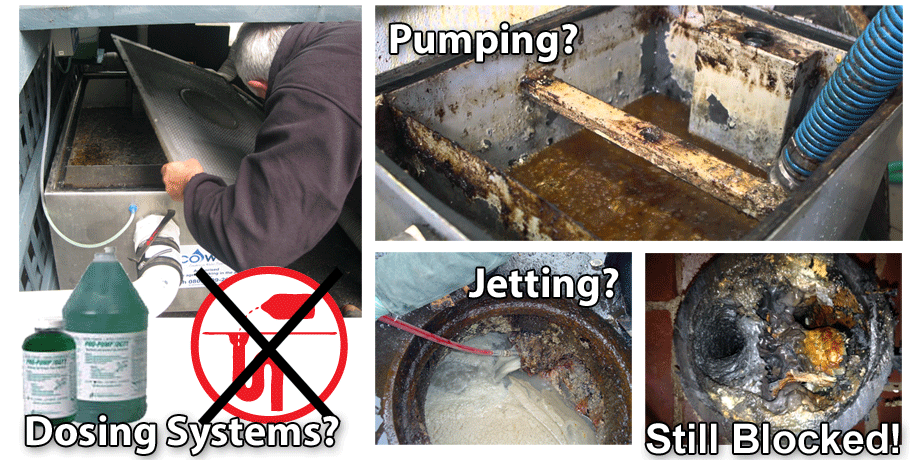
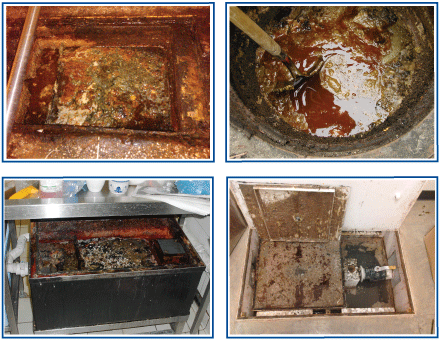
Fats, Oils and Grease in Drains and Sewers, the Environmental Impact! Fat, oil and grease cause major problems to drains and sewers. When they are disposed of down kitchen sinks or drains they cause blockages; when they enter rainwater pipes or gullies they cause pollution in streams and rivers. Fat, oil and grease in liquid form may not appear to be harmful, but as it cools it congeals and hardens. It sticks to the inner lining of drainage pipes and restricts the wastewater flow causing the pipes to block. Using detergents or bleach may appear to help but this is only temporary as the mixture soon turns back to thick or solid fat. The number of blockages and pollution incidents relating to fat, oil and grease are also increasing. There are approximately 250,000 sewer blockages throughout the |
UK and Ireland every year of which up to 75% are caused by fats, oils and grease. Clearing these blockages costs millions of pounds a year which is reflected in customer’s bills. Businesses also risk blocking their own drainage systems, which results in extra costs being incurred in clean-up efforts. These fat blockages can result in sewer flooding, odour problems and the risk of rat infestations, both near and beyond your premises. In fact, every outlet disposing of fats, oils and grease into sinks and drains is at risk of experiencing damaging and costly drainage problems. Left unchecked, fats, oils and grease (FOG's) can create big problems for your business, and land you on the wrong side of the law. |
|||
 |
||||
Passive Greasetraps - 120 Year Old Technology!
The Solution ... GreaseShield! The cost effective solution to fats, oils and grease drain blockages.
|
|
|||
| The Only Global Green Tag Certified Grease Trap for ECO Specifiers | ||||
 |
Why GreaseShield?
|
|||
Applications |
||||
 |
||||
| An Unrivalled Award Winning Appliance to Solve Grease Related Problems | ||||
|
|
|||
| 18 International Awards In 7 Years | ||||
 |
||||
Legal Requirements There are a number of legal requirements in place to help prevent fat, oil and grease entering drains and sewers. Failure to adhere to these can lead to enforcement and prosecution. Water Industry Act 1991 It is a criminal offence under section 111 of the Water Industry Act 1991 to discharge into the public sewers any matter which may interfere with the free flow of wastewater. In addition, where the water company has incurred costs in dealing with the detrimental effects on the sewers e.g. removing blockages cleaning sewers, investigating and remedying flooding or pollution incidents, it can take legal action to recover these costs. Prosecution can result in substantial fines or even imprisonment. Environmental Protection Act 1990 Duty of Care Every commercial premises arranging collection and disposal of waste (including waste cooking oils and fat) must comply with the requirements of Section 34 of the Environmental Protection Act 1990 and the Environmental Protection Act (Duty of Care) Regulations 1991 as amended. The objective of the Duty of Care is to ensure that all waste is managed correctly from the place where it is produced to the point of final disposal. The producer of the waste must therefore ensure that the collector is registered with the Environment Agency as a “registered waste courier” and keep a record of all collections. The producer of the waste must also be satisfied that the waste is taken to a licensed disposal site. An authorised officer of the local authority can require production of documentation relating to the registration of the waste couriers. Failure to produce the documents can result in a £300 fixed penalty notice or prosecution. The local authority has power to carry out any required work and recover their costs in cases of default by the owner. |
Environmental Protection Act 1990 Statutory Nuisance The local authority’s environmental health department will deal with any reported complaints of “statutory nuisance” such as smells, effluents, accumulation of refuse or any premises in such a state as to be prejudicial to health or a nuisance. Where a statutory nuisance exists the local authority has to serve an “abatement notice” under Section 80 of the Act. Failure to comply can result in prosecution and the local authority also has the power to carry out work to abate the nuisance and recover their costs. Animal By-Products Regulations EC 1774/2002 (ABPR) From 1 November 2004 waste cooking oil from catering premises can no longer be used as an ingredient in animal feed. This is to safeguard the food chain. The collection of waste cooking oil must be via a licensed waste carrier. From October 2007 liquid waste may not be disposed of at landfill. Building Act 1984 Section 59 of the Building Act 1984 enables a local authority to require satisfactory provision for drainage of an existing building by service of a notice on the owner. This can include a requirement for the installation of a grease trap. Food Safety Act 1990 Local authorities are authorised to inspect premises under the Food Safety Act 1990. Problems arising from the effect of fat, oil and grease on drains, resulting in a failure to comply with the Food Hygiene Regulations, could result in prosecution or an emergency prohibition order preventing trading from the premises. |
|||
|
||||

| Follow EPAS on Social Media | |

|
|
| Home | News | Products | Services | Media | Contact | |
| 5 Shepherd's Drive, Carnbane Industrial Estate, Newry, Co. Down N. Ireland BT35 6JQ | |
| Tel: +44 (0) 28 3083 3081 Fax: +44 (0) 28 30257556 Email: info@EPAS-ltd.com www.EPAS-Ltd.com | |